Range and Rhythm: Muay Thai Kicking Fundamentals
Power is often one of the first things people associate with Muay Thai kicks, but an effective kick requires much more than raw force. Range,

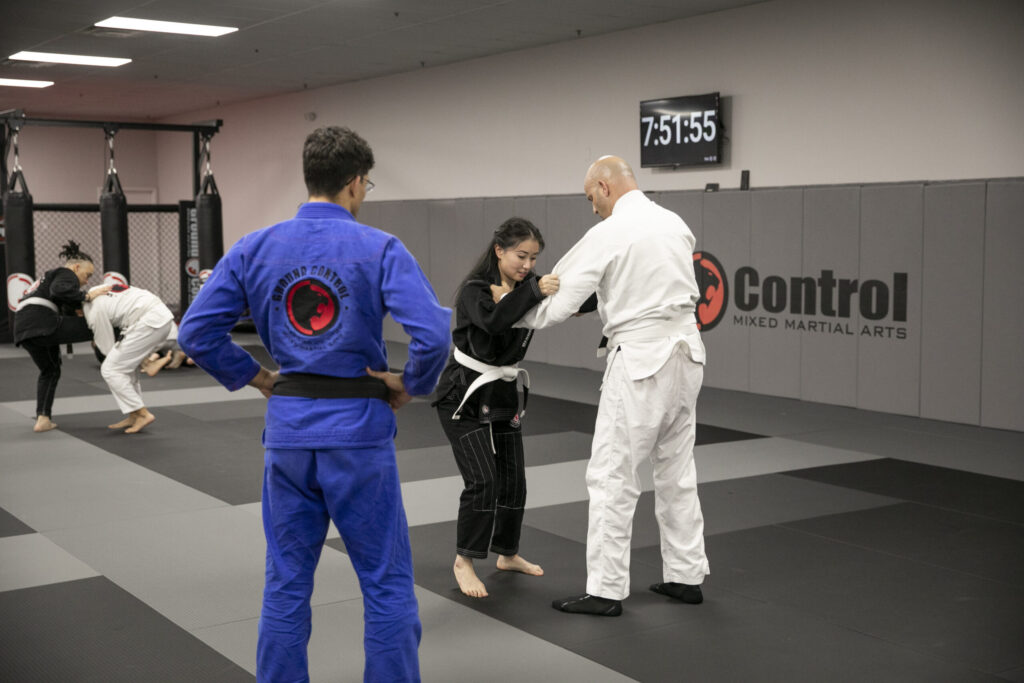
Gi vs. no-gi jiu-jitsu is a discussion most grapplers have at some point, and many people have strong preferences for one format over the other. The gi is the traditional form of Brazilian Jiu-Jitsu, while no-gi has established itself as a competitive path of its own. Both formats are contested at the highest levels, and organizations like the International Brazilian Jiu-Jitsu Federation (IBJJF) host championships in each.
The core techniques overlap more than many people might expect. What changes is what each person can grip, how quickly exchanges develop, and which positions prove most effective. Neither format is a lesser version of the other.
In the gi, the collar, sleeves, lapel, and pants provide both grapplers with fixed handles. Much of an exchange involves grip fighting, which means establishing the grips you want and breaking the ones your opponent has secured. These handles allow grapplers to manage distance, pull a partner off balance, and create opportunities for sweeps and passes.
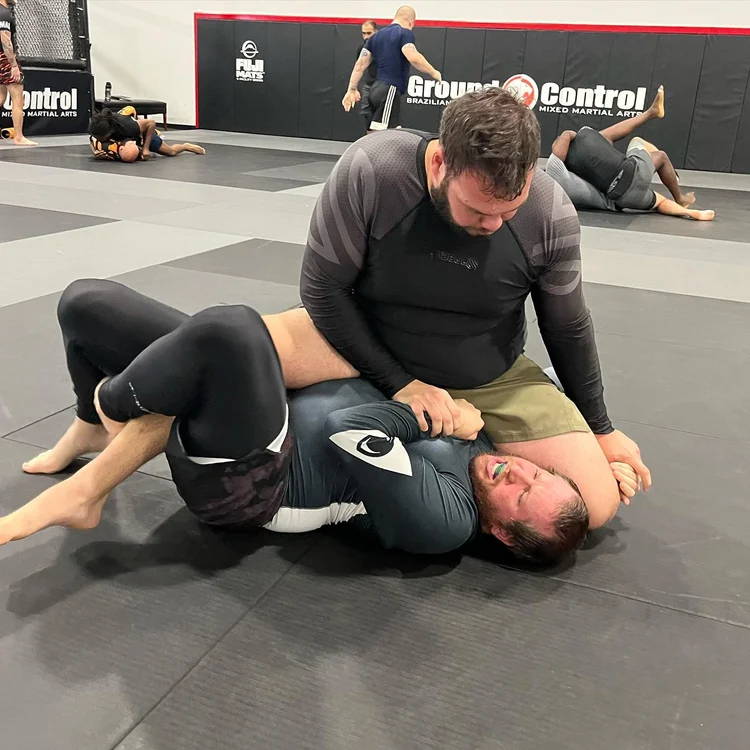
No-gi still involves plenty of grips, but they come from the body rather than clothing. Wrist control, underhooks, overhooks, head control, and body locks perform the same role that sleeve or collar grips would in the gi. Because sweat can make these holds slippery, grapplers often have to re-establish their control throughout an exchange.
Clothing grips can slow an exchange down. Once a strong grip is established, breaking it takes considerable effort, so positions can be maintained for longer and the pace often builds gradually. That patience and attention to detail are a big part of what many practitioners appreciate about the gi.
No-gi tends to move at a faster pace. With less clothing to hold on to, partners can escape positions more easily, and scrambles often happen more frequently. Consider a guard pass: in the gi, a grip on the pants or lapel can help a passer control the hips and limit the opponent’s ability to recover guard. In no-gi, the passer often needs to control the legs, hips, and upper body directly to prevent that recovery.
Our guide to how scrambles work in no-gi explores these exchanges in more detail.
Many gi guards are built around grips that use the clothing. Spider guard, lasso guard, and worm guard all depend on sleeve or lapel grips to manage distance and posture. In no-gi, guards such as butterfly, half guard, and seated guard rely more on underhooks, head control, and body positioning, while leg entanglements tend to appear more often.
Armbars, triangles, kimuras, and rear-naked chokes work in both formats, although the details of finishing a submission can change depending on whether there is fabric to grip. Cross-collar chokes depend on the gi itself. Guillotines, D’Arce chokes, and anacondas are common in no-gi, but none is exclusive to that format. Which submissions are legal also depends on the organization, belt level, and competition format, particularly when it comes to leg attacks.
Takedowns follow a similar pattern. In the gi, judo-style grips on the lapel and sleeve create opportunities for throws and trips. Without those grips, takedowns often rely more on wrestling techniques, including single legs, double legs, snap downs, and body locks. Wrestling and judo principles can still carry over to both formats, but the grips and setups change.
Without a jacket to grip, control in no-gi comes from the body through head position, underhooks, wrist control, and body locks. Those same grips and positions are what fighters use in MMA, which is why no-gi grappling often translates more directly to that environment. The wrestling-style takedowns and scrambles involved also resemble many of the exchanges that happen inside the cage.
MMA introduces challenges that a no-gi BJJ match does not. Fighters have to account for strikes and the cage, and a position that works well when the main goal is securing a submission may need to change when punches are possible. No-gi provides useful grappling tools, but applying them in MMA requires accounting for those additional factors.
That does not make the gi less useful for someone interested in MMA. Pressure, balance, and positional control are developed in both formats, and many fighters have experience training in each. Our guide to moving from BJJ to MMA covers that transition in more detail.
Each format can reveal weaknesses that the other might hide. A strong grip in the gi can sometimes compensate for loose body positioning, but no-gi tends to expose that weakness quickly. A fast scramble in no-gi can hide a missing technical detail, while the slower grip fighting of the gi often brings it back to the surface.
That is why many grapplers treat the two formats as complementary forms of training. Time spent in the gi sharpens how a person thinks about grips and posture, while no-gi improves how they control another person’s body without relying on clothing grips. There is nothing wrong with having a favorite, either. Both formats offer plenty of opportunities to improve, and training in both can make familiar habits easier to recognize.
Whichever format you decide to try first, the fundamentals carry over. At Ground Control Stuart, we offer Brazilian Jiu-Jitsu and MMA classes for anyone who wants to explore these martial arts and develop their grappling skills.

Power is often one of the first things people associate with Muay Thai kicks, but an effective kick requires much more than raw force. Range,


Backpacks are coming out, school supplies are ready, and families are shifting from summer schedules back into the school-year routine. For Ground Control Stuart families,
Most people don’t walk through the doors of Ground Control expecting their training to change much beyond their physical fitness. They come to challenge themselves,